New shotgun owners often expect buckshot to spread like movie magic. Real life says, “Nice try.” Pattern size depends on the shotgun, choke, load, and distance.
That is why these buckshot practice tips start with pattern tests. You need to see where the pellets land with your own shotgun.
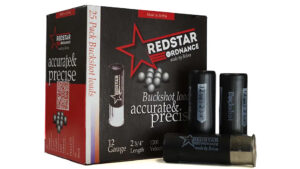
Red Star Ordnance offers RedStar Ordnance 12 Gauge 9 Pellet 2 3/4 in, a 00 Buck load for shotgun users who want a Red Star Ordnance buckshot option.
Put Safety First
Shotgun practice starts with basic safety. Wear eye protection and ear protection. Follow the range rules. Keep the muzzle pointed in a safe direction. Keep your finger off the trigger until ready to fire.
Use the correct ammunition for your shotgun. Check shell length and gauge. Keep buckshot separate from slugs or other loads.
Good buckshot practice tips should make the range day safer and easier to understand. No one needs surprise ammo confusion. Shotguns already provide enough excitement.
Pattern One Shot at a Time
Use a clean paper target. Stand at a range-approved distance. Fire one buckshot round from a stable position. Then inspect the target.
Mark the center of the pattern. Count pellet hits if possible. Write the distance and load on the target.
Use a fresh target for the next distance. Do not fire five buckshot rounds at the same paper and then try to decode it like ancient cave art. One shot per target gives you clear information.
Test More Than One Distance
A buckshot pattern grows as distance increases. That growth can surprise new owners.
Start close, then move farther only if the range allows it. Compare targets. Does the pattern stay centered? How wide does it get? Do any pellets land far from the main group?
These buckshot practice tips help you learn the practical limits of your setup. You do not have to guess. The paper shows the answer.
Keep notes short. Distance, load, pattern size. That is enough.
Control Recoil With Stance
A 12-gauge shotgun can push hard. Good stance helps. Lean slightly forward. Set the stock firmly into your shoulder. Keep your cheek on the stock.
Do not stand straight up like a lamp post. Recoil will find you. It always does.
Fire one round, reset your stance, then fire again. Do not rush. New owners often hurry after the first shot. Slow practice builds better control and better confidence.
Use the Same Hold Each Time
Pattern tests need repeatability. Hold the shotgun the same way for each shot. Aim the same way. Use the same shoulder contact and cheek placement.
If you change your hold each time, you will not know what caused the pattern shift. Was it the load? The distance? Your cheek weld? The ghost of bad technique?
Keep the process simple. Same shotgun, same load. Same hold. Different distance. That gives useful results.
Separate Buckshot and Slug Practice
Buckshot and slugs need different targets and different notes. Buckshot creates a pattern. Slugs create single projectile impacts.
Red Star Ordnance also offers RedStar Ordnance 12 Gauge 1oz 2 3/4 in, a rifled slug option for shotgun shooters who want dedicated slug practice.
Do not mix buckshot and slug results on the same target. That turns useful practice into a guessing game. Keep each load separate.
Practice Safe Loading and Unloading
Buckshot practice should include safe handling. Practice safe loading, safe unloading, and chamber checks according to your shotgun manual and range rules.
Move slowly at first. Speed can come later. Control matters more. A new shotgun owner should build habits that stay safe under pressure.
Use dummy rounds for home handling practice if you have them, and keep live ammunition away from that area. At the range, follow every command from the range officer.
Keep Round Count Reasonable
New shotgun owners do not need a marathon session. Recoil fatigue can create bad habits. It can also make you dread the next trip, which helps nobody.
Bring enough buckshot for useful pattern work. Stop while your form still looks good. A shorter, focused session beats a long, sloppy one.
These buckshot practice tips work best when you leave the range with good notes and good habits, not a sore shoulder and a grudge.
Conclusion
The best buckshot practice tips stay simple: pattern your shotgun, use clean targets, test distance, control recoil, and keep safe handling sharp.
For 12-gauge buckshot, rifled slugs, AK-based sporting rifles, and more range-ready products, visit Red Star Ordnance.